
Many people who’ve worked with me know my Platinum model, and I’m sharing it again, here, having been reminded of it this week by a client who remembered it from a coaching session long ago, yet who still finds it useful.
It goes like this:
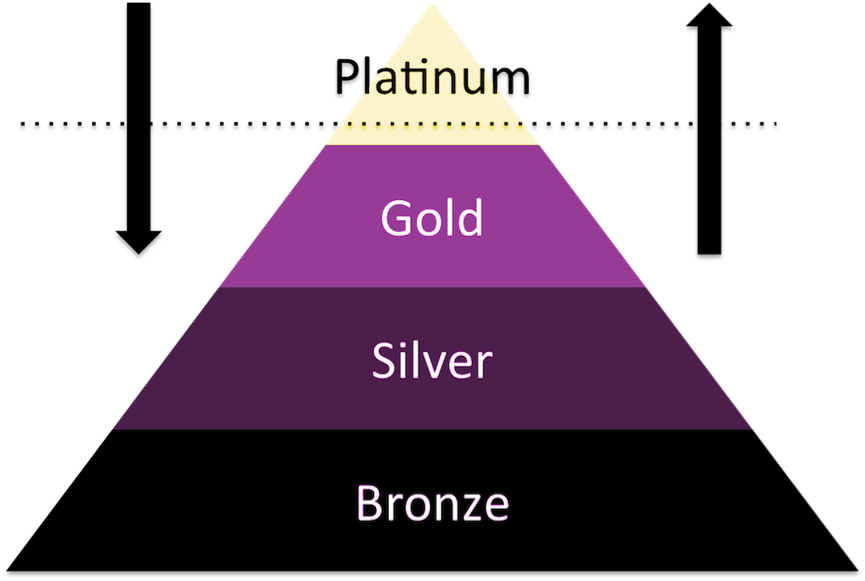
I designed my Platinum Model when managing a fabulous team. They were skilled, enthusiastic, adored, and consistently working at a standard that anyone would be proud to reach: platinum.
But under pressure, a derailer surfaced. Theirs was taking work home to better-prepare for next day delivery, when in reality they could have delivered to a more than acceptable standard without that additional prep.
Getting onto the medal table was always going to be easy for my team because of the highly-skilled, dedicated professionals they were, but how to convince them that they could feel good about accepting that “tomorrow team . . . GOLD will be OK!?” The answer was to persuade them that at gold standard, they were still exceptional.
I was amazed recently when a client reminded me of the language of the Platinum Model. They shared that they’d been unhappy when someone criticised management of their workload, telling them they had to work at silver, rather than gold – but the downgrade to silver was instantly uncomfortable and a notion they simply couldn’t accept. Then they applied the Platinum Model thinking, and the idea of gold rather than platinum (at least sometimes) instantly resonated with them.
Is there an opportunity for you as a leader, or as a team member, to go for gold sometimes by doing it differently? All medals are worth having, and extra effort wins you the top prize, and feels brilliant. But it’s not easy working at platinum all the time.

 ChristineWilkinsonCoaching
